

With its lithe body, ringed tail, and striking black and white markings, the Genet (Genetta genetta) is one of Portugal’s most enigmatic and stealthy residents. This small carnivore, often mistaken for a cat, is a nocturnal predator with a taste for small mammals, birds, and even insects. While the Genet may seem elusive to the casual observer, its presence in the forests and scrublands of southern Portugal is a fascinating reminder of the country’s untamed wilds.
Though not as well-known as other Iberian predators, the Genet is an important part of Portugal’s biodiversity, playing a critical role in controlling populations of small mammals and helping maintain healthy ecosystems. Today we delve into the life of the Genet, its habitats, its behaviors, and the conservation challenges it faces in Portugal.
What Makes the Genet Unique?
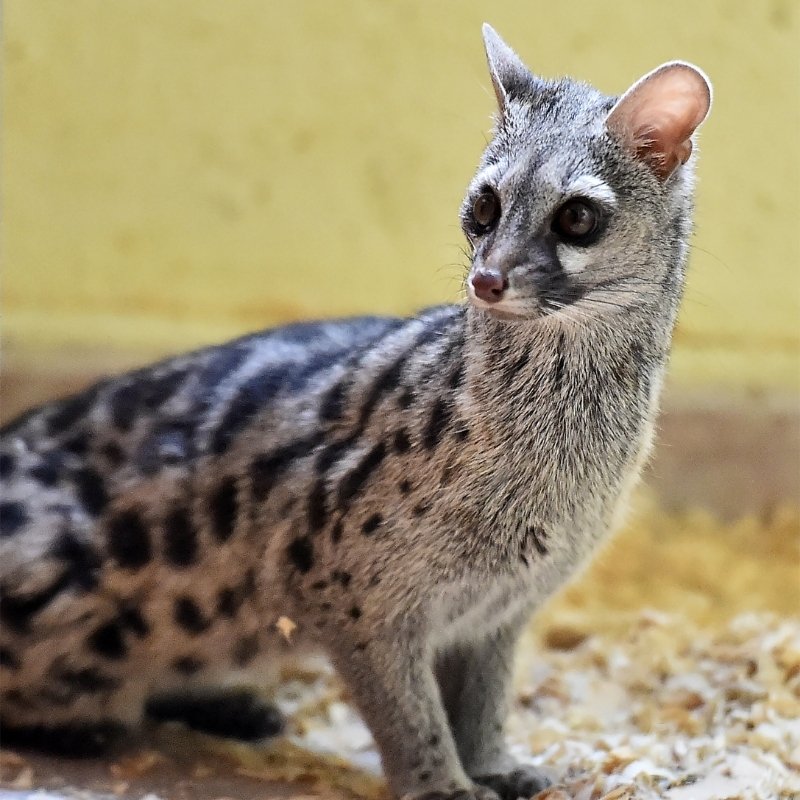
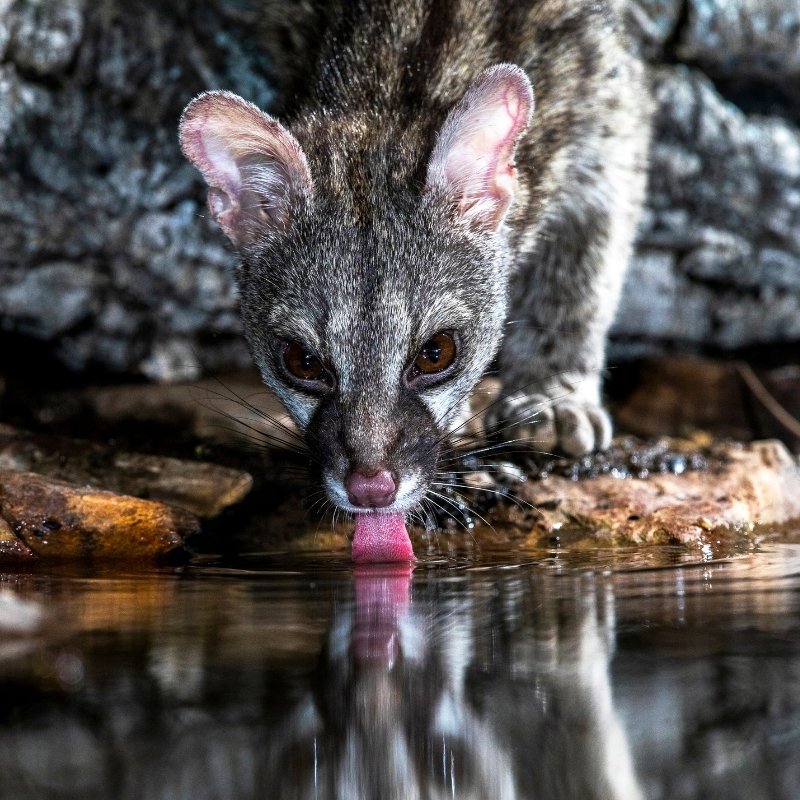
The Common Genet is a small carnivore belonging to the Viverridae family. Though similar in appearance to a cat, the Genet is actually more closely related to mongooses and civets. Its slender, elongated body and large, almond-shaped eyes give it an air of mystery — perfectly suited to its secretive nature.
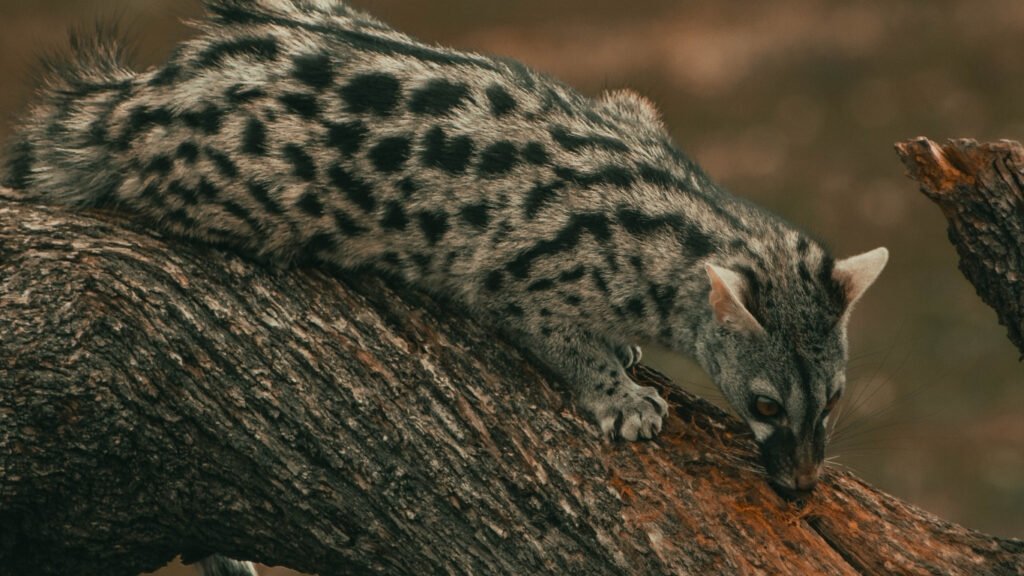
A Genet’s most distinguishing feature is its long, bushy tail, which is typically ringed in alternating black and light-colored bands. This tail helps with balance and agility as the Genet prowls through trees, often spending as much time in the branches as it does on the ground. Its coat is usually a greyish or yellowish-brown with dark spots or streaks, making it well camouflaged in the undergrowth.
Genets are excellent climbers, thanks to their retractable claws, and are often found in the canopies of trees where they hunt birds and small mammals. While they are solitary creatures, they do share their territories with other Genets, as long as food is plentiful and there is enough cover for all.
Where Do Genets Live in Portugal?
The Genet is found primarily in Southern and Central Portugal, but its range extends throughout most of the mainland. They inhabit forests, scrublands, and Mediterranean woodlands, with a preference for areas with dense underbrush and rocky outcrops, where they can hide from predators and rest during the day.
In Portugal, the Genet is especially abundant in areas like Monchique and the Serra da Malcata, where the terrain provides the cover, food sources, and tree canopies the Genet needs to thrive. While the Genet is more commonly associated with rural and remote regions, it can occasionally be found in semi-urban areas as well, particularly if they offer sufficient vegetation and prey.
The Genet is largely nocturnal, and its secretive nature makes it difficult to spot, even for wildlife enthusiasts. It is, however, a vital part of the ecosystem, helping to control populations of rodents and other small animals.
A Day in the Life of a Genet
The Genet’s day begins just after dusk when it emerges from its den, typically located in tree hollows, rocky crevices, or abandoned buildings. Unlike many nocturnal predators, the Genet is not a purely ground-dwelling animal. It spends a significant amount of time in the trees, hunting and foraging in the canopy for birds, insects, and small mammals like rabbits and rodents.
During the night, a Genet will often travel several kilometers in search of food, moving silently through the underbrush, climbing trees, and using its keen sense of smell and hearing to track prey. Its diet is opportunistic, and while it prefers live prey, it will scavenge if necessary, feeding on carrion or leftover food scraps.
When the morning light begins to filter through the trees, the Genet retreats to its den, where it remains hidden and rests for the day. Its solitary nature means that it generally avoids contact with other Genets, although overlapping territories are common. They mark their territory with scent glands located near the base of the tail, leaving behind a musky odor that warns other Genets to stay away.
Little-Known Facts About the Genet in Portugal
Here are some fascinating and lesser-known facts about the Genet:
- Not a cat! While the Genet shares some physical similarities with domestic cats, it is actually a member of the Viverridae family, more closely related to civets and mongooses than felines.
- Excellent climbers: Genets are exceptional climbers and typically spend as much time in the trees as on the ground. Their retractable claws and agility make them adept at navigating vertical landscapes.
- Solitary but social: While Genets are primarily solitary creatures, they can communicate through scent-marking, vocalizations, and body language to establish territorial boundaries and attract mates.
- Night hunters: The Genet is strictly nocturnal, and its nocturnal habits are likely a strategy to avoid predators and human activity.
Conservation and Challenges for the Genet
Despite being relatively widespread in Portugal, the Genet faces a number of conservation challenges. Habitat loss due to urbanization, deforestation, and agricultural expansion has diminished the available cover and hunting grounds. Additionally, road mortality is a significant threat, as Genets often cross roads in search of food or new territories.
The Genet is a protected species in Portugal, and efforts are underway to ensure its survival. Conservation initiatives focus on preserving and restoring the Genet’s natural habitat, particularly through the creation of wildlife corridors and the protection of forests and scrublands. Additionally, there is an emphasis on monitoring Genet populations through camera traps and field surveys to better understand their behavior, distribution, and threats.
Why Protecting the Genet Matters
Though small in size, the Genet plays an important ecological role in Portugal. As a predator, it helps regulate populations of rodents, birds, and other small animals, keeping the ecosystem in balance. Additionally, the Genet is a bioindicator, meaning that its health and presence are often used as a gauge for the overall condition of the environment. Healthy Genet populations usually signal a thriving, balanced ecosystem with abundant prey and suitable habitat.
Beyond its ecological importance, the Genet also contributes to the biodiversity of Portugal, enriching the country’s wildlife heritage. Protecting the Genet ensures that future generations will have the opportunity to experience this elusive creature and the forests it inhabits.
How to Spot a Genet in Portugal
Seeing a Genet in the wild can be challenging due to its nocturnal and secretive nature. However, certain areas of central and southern Portugal offer the best opportunities for sightings, particularly in protected natural parks like Serra da Malcata and Monchique.
If you’re keen to spot a Genet, join a night safari or wildlife tour with experienced guides who know where to look for signs of the Genet’s presence, such as tracks, droppings, or scent marks. Wildlife camera traps in these areas may also capture images of the Genet, offering a rare glimpse into its nocturnal life.
Remember, Genets are shy creatures, so patience and respect for their habitat are key. Enjoy the mystery of the Genet from a distance, and you may be lucky enough to see this elusive predator on its nocturnal prowls.

